
Disclosure: This post contains affiliate links. If you buy through them, Planty Shanty may earn a small commission at no extra cost to you. As an Amazon Associate, I earn from qualifying purchases.
This article is for general educational purposes and is not medical advice. Herbs can interact with medications and conditions — talk to a qualified healthcare provider before using them, especially if pregnant, nursing, or treating a health issue.
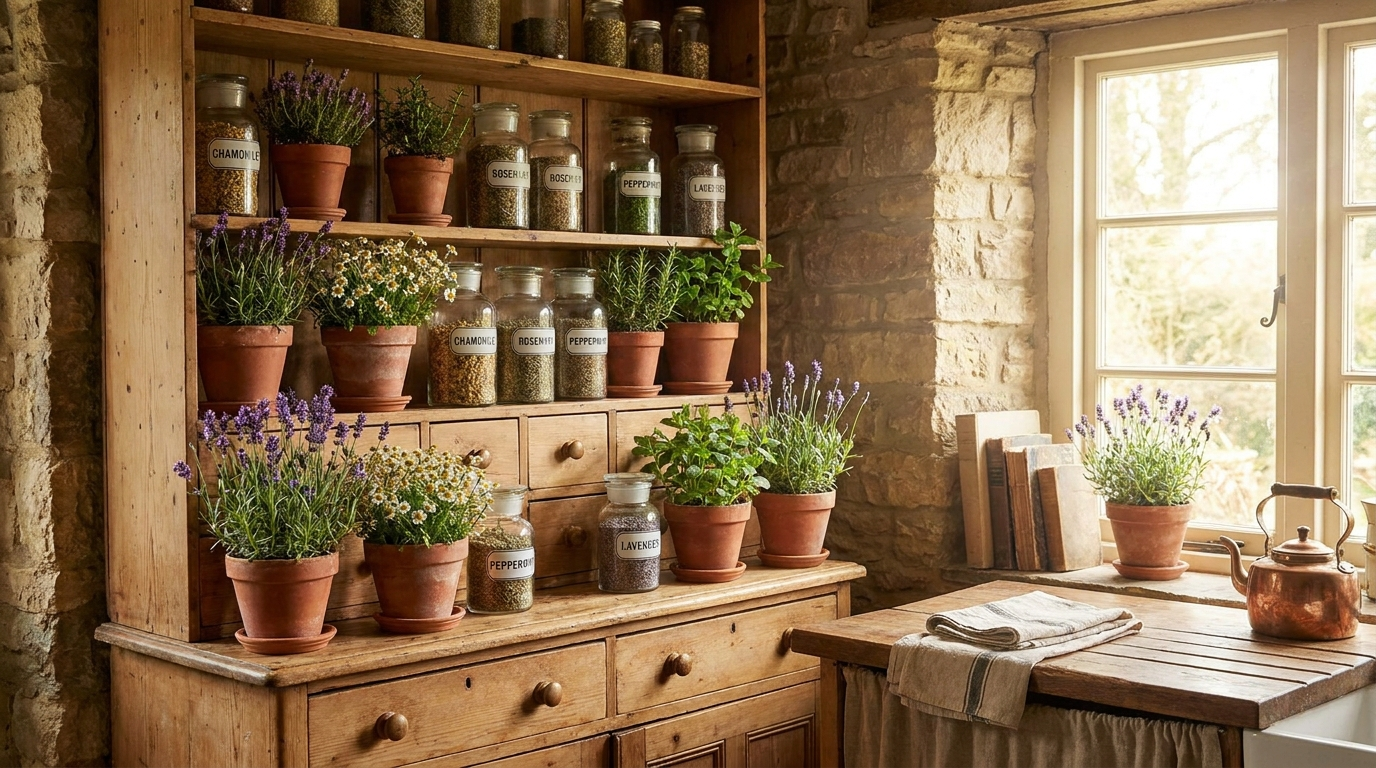
There’s something deeply satisfying about walking to a sunny windowsill, snipping a few leaves, and steeping a cup of tea you grew. A healing herb cabinet — a small collection of medicinal and culinary herbs — is the most useful, beginner-friendly garden you can start. Most of these thrive in a pot on a bright sill, and each has a long history of traditional use.
Here are twelve to build your cabinet around, how to grow them, and the simple gear that makes harvesting and storing them easy.
Grow these first (easiest + most useful)
1. Chamomile
Gentle, apple-scented flowers traditionally brewed as a calming bedtime tea. Loves full sun and well-drained soil; let it dry slightly between waterings. Start from chamomile seeds.
2. Peppermint
Vigorous and nearly unkillable — grow it in its own pot (it takes over gardens). Traditionally used for digestion. Prefers moist soil and part sun. Grab a peppermint plant or seeds.
3. Lemon Balm
A lemony member of the mint family, long used to ease stress and lift mood. Tough, fast, and happy in a pot. Try lemon balm seeds.
4. Lavender
Beautiful, fragrant, and calming — great for tea, sachets, and sleep. Needs the sunniest spot and gritty, fast-draining soil (it hates wet feet). Start with a lavender plant.
5. Holy Basil (Tulsi)
Revered in Ayurveda as an adaptogen for stress. Warm, clove-like, and easy from tulsi seeds in a bright, warm spot.
6. Calendula
Cheerful orange flowers traditionally infused into skin-soothing salves. Blooms fast from calendula seeds and loves full sun.
The kitchen-and-medicine-cabinet crossovers
7. Rosemary
Piney and antioxidant-rich; great for cooking and memory-boosting folklore. Wants sun and sharp drainage. A rosemary plant is the easy start.
8. Thyme
Tiny leaves with big antimicrobial tradition (think old-fashioned cough syrups). Drought-tolerant and perfect for pots. Sow thyme seeds.
9. Sage
Earthy and traditionally used as a sore-throat gargle. Loves sun and dry-ish soil. Begin with a sage plant.
10. Ginger
Grow it from a plump grocery-store rhizome in a wide, shallow pot of rich soil, kept warm and moist. Classic for nausea and digestion. Or start with a ginger root growing kit.
11. Echinacea (Coneflower)
A hardy perennial traditionally used to support immunity. Gorgeous purple blooms from echinacea seeds; full sun.
12. Aloe Vera
The ultimate low-effort healer — snap a leaf for its cooling gel on minor burns. Treat it like a succulent: bright light, water only when bone-dry. Pick up an aloe vera plant.
Setting up your herb cabinet
You don’t need much — just light, the right pots, and a way to harvest and store:
- Light: most herbs want 6+ hours of sun. A dim kitchen? Add a grow light.
- Pots: breathable terracotta pots with drainage keep roots from rotting.
- Starter simplicity: an all-in-one indoor herb garden kit is the fastest way to begin.
- Harvest: clean herb snips for tidy cuts.
- Dry & store: a small herb drying rack and amber apothecary jars keep dried herbs fresh and looking beautiful on the shelf.
- Brew & blend: a tea infuser and a mortar and pestle turn fresh leaves into teas, salves, and seasonings.
Frequently Asked Questions
Which healing herb should a total beginner start with? Peppermint, lemon balm, or aloe — all three are forgiving and useful within weeks.
Can I grow these indoors year-round? Yes, with enough light. A south-facing window or a grow light keeps most of them productive through winter.
How do I dry herbs? Snip in the morning, bundle stems with twine, and hang in a dry, airy spot out of direct sun for 1–2 weeks — or use a drying rack. Store in airtight amber jars away from light.
Start with three or four, get a feel for them, and let your cabinet grow. There’s real magic in healing yourself with something you raised from seed. 🌿 — Planty Shanty
Leave a Reply