
Disclosure: This post contains affiliate links. If you buy through them, Planty Shanty may earn a small commission at no extra cost to you — it’s what keeps our care guides free. As an Amazon Associate, I earn from qualifying purchases. We only recommend gear we’d put next to our own plants.
Few houseplants make an entrance quite like an Alocasia. Those arrowhead leaves — glossy, sculptural, sometimes veined like stained glass — turn a bare corner into something out of a rainforest. They also have a reputation: dramatic, a little demanding, prone to throwing a leaf when they’re unhappy. But here’s the secret we tell every nervous new owner: Alocasias aren’t hard, they’re just honest. Give them what they’d get on a tropical forest floor — warmth, humidity, bright filtered light, and a fast-draining pot — and they’ll reward you with leaf after gorgeous leaf. Here’s exactly how to do it.
1. Meet the Alocasia
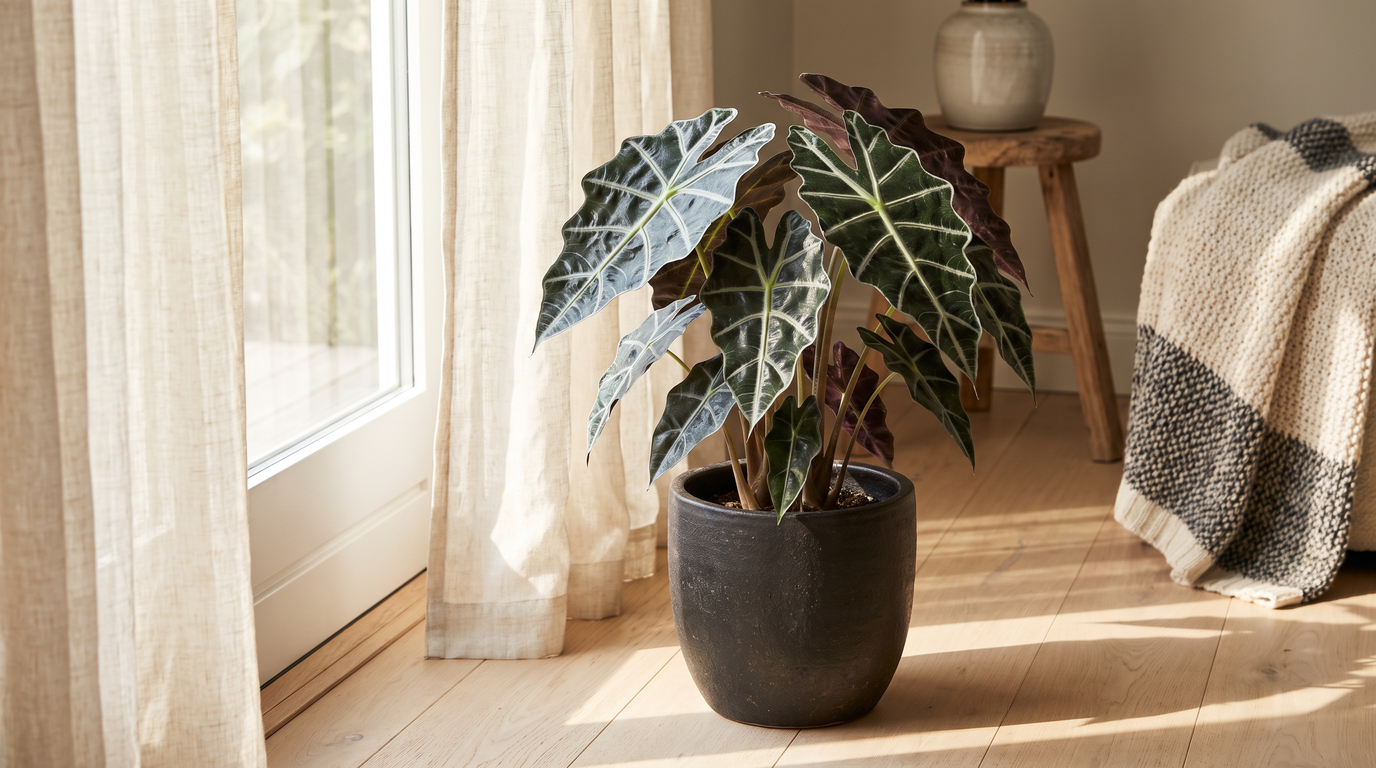
Alocasia (often called Elephant Ear or African Mask plant) is a genus of tropical rhizome-growers native to the humid understory of Asia and eastern Australia. There are dozens of showstoppers to collect:
- Alocasia Polly / Amazonica — the classic “African Mask,” with wavy-edged dark leaves and bright white veins.
- Alocasia Zebrina — prized as much for its zebra-striped stems as its arrowhead leaves.
- Alocasia Frydek — velvety, deep-green leaves with crisp white veining.
- Alocasia Black Velvet — compact, jewel-like, almost-black textured leaves.
- Alocasia Regal Shield — a big, bold hybrid that can reach dramatic, floor-plant proportions.
One thing that surprises new owners: Alocasias grow from a rhizome or corm, which means they naturally cycle through active growth and rest. A leaf dying back isn’t always a crisis — sometimes it’s just the plant reallocating energy. More on that below.
2. Light Requirements
Think bright, indirect light — the dappled brightness of a forest canopy, not the blazing exposure of an open field.
- Best growth: a few feet back from a bright east- or west-facing window, or near a sheer-curtained south window.
- Tolerates: medium light, though growth slows and new leaves come smaller.
- Avoid: harsh, direct midday sun, which scorches those thin leaves and fades the color.
Too little light is the quiet killer here — Alocasias in dim corners tend to stall, drop leaves, and sulk. If your space runs dark, especially through winter, a full-spectrum LED grow light makes an enormous difference and keeps the veining crisp.
3. Watering Routine
Alocasias like to stay evenly moist — but never soggy. This is the tightrope that trips people up: they hate drying out completely, and they hate sitting in water even more.
- Water when the top inch or two of soil feels dry — usually every few days in summer, less in winter.
- Water thoroughly until it runs from the drainage hole, then empty the saucer so the roots never sit in water.
- Use room-temperature water; cold water shocks the roots.
Because that “moist but not wet” window is narrow, a cheap soil moisture meter is genuinely worth it here — it removes the guesswork that leads to both crispy edges (too dry) and yellowing, mushy stems (too wet). Alocasias are also sensitive to the fluoride and chlorine in some tap water; if you see stubborn brown tips, try filtered or rainwater, or let tap water sit out overnight before using.
4. Ideal Soil Mix
Drainage and aeration are everything. A dense, water-logging soil is the fastest route to root rot. Aim for a chunky, airy, aroid-style mix that holds a little moisture but drains fast.
An easy DIY blend: equal-ish parts potting soil, orchid bark, perlite, and a handful of coco coir for moisture retention. Prefer to skip the mixing bowl? A ready-made aroid potting mix does the job beautifully. Whatever you use, always pot in a container with a drainage hole.
5. Fertilizing
These are hungry plants during their growing season. Feed with a diluted balanced houseplant fertilizer every 2–4 weeks in spring and summer to fuel all that leaf production. Ease off in fall and stop entirely in winter, when growth naturally slows. Over-fertilizing causes salt buildup and brown, burnt leaf edges — when in doubt, dilute more and feed less.
6. Temperature & Humidity
This is where Alocasias show their tropical roots most clearly.
- Temperature: happiest at 65–80°F. Keep them above 60°F and away from cold drafts, AC vents, and chilly windowsills — a sudden cold snap can send them into dormancy.
- Humidity: they crave it — 60% or higher is ideal. Average indoor air is often too dry, which shows up as crispy edges and stalled growth.
Grouping plants together helps, but the reliable fix is a cool-mist humidifier running nearby. A pebble tray adds a little boost too. A small hygrometer takes the mystery out of whether your air is actually humid enough.
7. Repotting
Alocasias like to be slightly snug in their pots and bloom into their best growth when a little root-bound, so don’t rush to size up. Repot every 1–2 years, ideally in spring, when you see roots creeping from the drainage hole or the plant drying out unusually fast.
Move up just one pot size, refresh with fresh airy mix, and be gentle with the rhizome. Repotting is also the perfect moment to check for pups (see next section) and to inspect the roots — healthy ones are firm and pale; mushy, brown roots mean it’s time to trim rot and refresh the soil. A snug pot also lets the soil dry at a sane pace, which helps you avoid overwatering.
8. Propagation
Alocasias don’t propagate from leaf or stem cuttings the way pothos does — they multiply by producing offsets (“pups”) from the rhizome. The easiest method:
- At repotting time, gently loosen the soil and look for small pups with their own roots attached to the main clump.
- Separate a well-rooted pup by hand (or with a clean, sharp knife), keeping as many roots as possible.
- Pot it in its own small container of airy mix, keep it warm and humid, and be patient while it establishes.
You can also find small corms in the soil — bead-like nodules that can be sprouted in damp sphagnum moss inside a warm, humid container. It’s slow, but deeply satisfying when a new leaf finally unfurls.
9. Common Problems & Pests
- Yellowing leaves: most often overwatering — check that the soil isn’t staying soggy and that the pot drains freely.
- Crispy brown edges/tips: low humidity, underwatering, or sensitivity to minerals in tap water.
- Drooping: usually thirst or a temperature/light shock; check the soil before assuming the worst.
- Sudden leaf loss / dormancy: cold, low light, or seasonal rest. If the rhizome is firm, keep it barely moist and warm — new growth often returns when conditions improve.
- Pests: Alocasias are magnets for spider mites (especially in dry air), plus the occasional mealybug or thrips. Inspect leaf undersides regularly, wipe them down, and treat with neem oil or an insecticidal soap. Boosting humidity is your best spider-mite prevention.
Frequently Asked Questions
Why does my Alocasia keep dropping leaves? A little leaf turnover is normal — Alocasias often sacrifice an old leaf for each new one. Rapid loss usually points to overwatering, cold drafts, low light, or a plant slipping into dormancy. Check conditions before panicking; if the rhizome is firm, it can bounce back.
Is Alocasia toxic to pets? Yes — like most aroids, Alocasias contain insoluble calcium oxalate crystals and are toxic to cats, dogs, and humans if chewed. Keep them well out of reach of curious pets and kids.
Why is my Alocasia “crying” or dripping water? Those droplets on the leaf tips are guttation — completely normal, and often a sign the plant is well-watered and happy. Just wipe them so they don’t leave mineral spots.
Do I need to mist it? Misting offers only a brief humidity bump and can invite fungal issues on those velvety leaves. A humidifier is a far more reliable way to keep humidity high.
Quick Gear Checklist
- 💧 Soil moisture meter
- 🌫️ Cool-mist humidifier + hygrometer
- 🪴 Aroid potting mix (or orchid bark + perlite)
- 💡 Full-spectrum grow light
- 🌿 Balanced fertilizer
- 🐛 Neem oil + insecticidal soap
Alocasias have a reputation for drama, but really they just wear their feelings on their leaves. Learn to read them — warmth, humidity, bright filtered light, and a fast-draining pot — and these jungle divas will unfurl one jaw-dropping leaf after another. Happy growing, from all of us at Planty Shanty. 🌱
Leave a Reply