
Disclosure: This post contains affiliate links. If you buy through them, Planty Shanty may earn a small commission at no extra cost to you — it’s what keeps our care guides free. As an Amazon Associate, I earn from qualifying purchases. We only recommend gear we’d put next to our own plants.
If Pothos and Philodendron are the gateway plants of the houseplant world, the Syngonium — better known as the Arrowhead Plant — is the one that turns a casual grower into a collector. It’s just as forgiving as those beginner favorites, but it comes in a jaw-dropping range of colors: soft pinks, creamy whites, minty neons, and speckled confetti splashes. It grows fast, roots in a glass of water almost overnight, and morphs its leaf shape as it matures. Here’s how to keep an Arrowhead full, colorful, and thriving — whether you want it bushy on a shelf or vining up a pole.
1. Meet the Syngonium
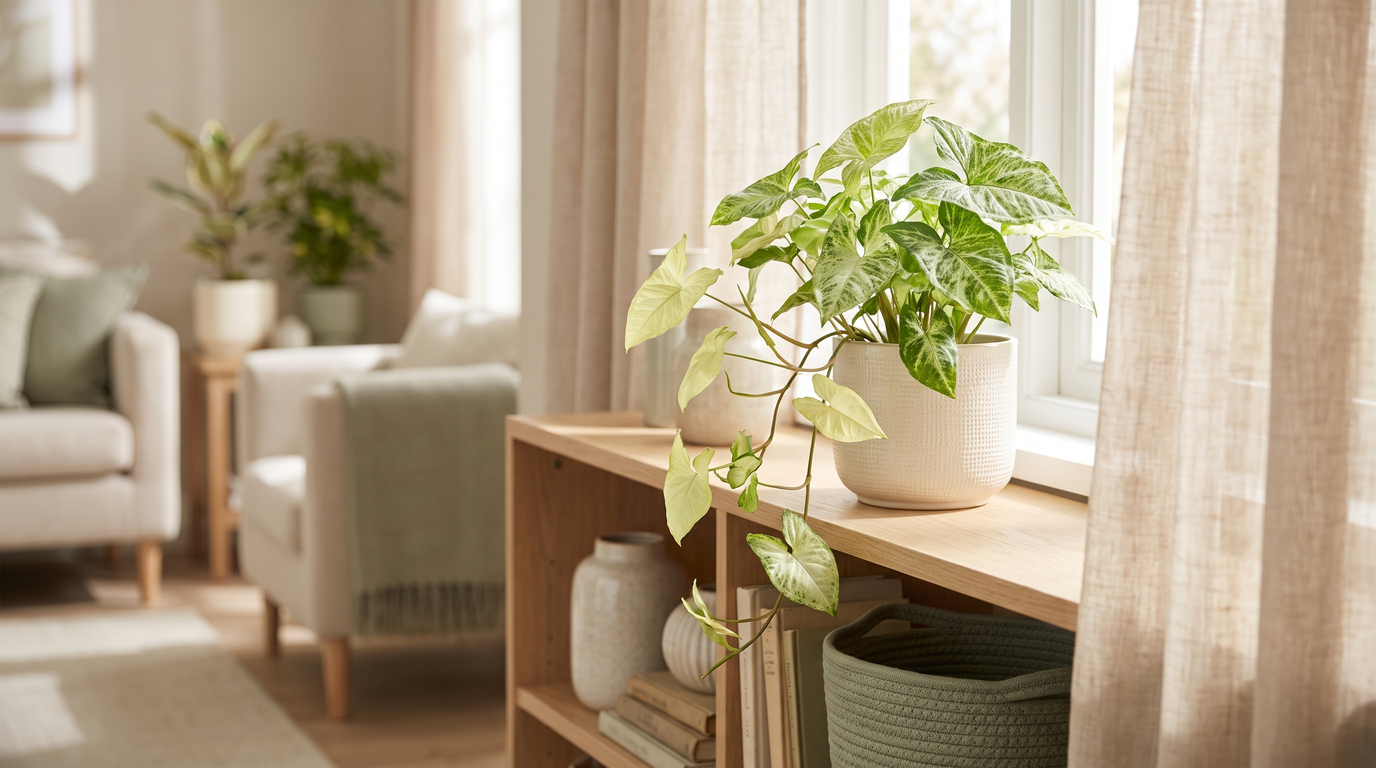
The Syngonium (Syngonium podophyllum), native to the tropical rainforests of Central and South America, is an aroid — a cousin of Pothos, Philodendron, and Monstera. Its charm is in its transformation: young leaves emerge as neat little arrowheads, and as the plant matures and starts to climb, those same leaves develop deep lobes and split into three, five, or more sections. Two plants of the same variety can look completely different depending on their age and whether they’re trailing or climbing.
A few of the most-loved varieties:
- White Butterfly — the classic, with pale sage-green leaves and creamy centers.
- Pink Allusion / Neon Robusta — blush-pink to bubblegum leaves that stay pink in good light.
- Berry Allusion — soft green with pink veining, a subtle stunner.
- Confetti / Mottled — green leaves freckled with pink speckles.
- Albo Variegata — dramatic white-and-green variegation; rarer and slower.
Syngonium is a genuinely fast grower in the warm season, so it rewards you quickly — and forgives the occasional misstep just as fast.
2. Light Requirements
Light is the dial that controls your Arrowhead’s color, so it’s worth getting right.
- Best growth & color: bright, indirect light. This is where pinks stay pink and variegation stays crisp.
- Tolerates: medium light — it’ll keep growing, but colorful varieties fade toward green and growth slows.
- Avoid: harsh, direct afternoon sun, which scorches those thin leaves and bleaches the color.
The all-green types (like the plain Arrowhead) handle lower light better than the pink and white cultivars, which are hungrier for brightness. If your colorful Syngonium is reverting to green or getting leggy, that’s your cue it wants more light — a LED grow light on a timer restores the vibrance beautifully. Rotate the pot every couple of weeks so it grows evenly.
3. Watering Routine
Syngoniums like to stay lightly moist — more thirsty than a Snake Plant, less needy than a fern. The sweet spot is easy to hit.
- Water when the top 1–2 inches of soil feel dry to the touch.
- In the growing season that’s often once a week; in winter, stretch it out as growth slows.
- Water thoroughly until it drains from the bottom, then empty the saucer — never let it sit in water.
Reading your plant: droopy, limp stems that perk back up after a drink mean it got a little too dry (no harm done). Yellowing lower leaves and a persistently soggy base point to overwatering, the more common danger. If you tend to over-love your plants, a cheap soil moisture meter takes the guesswork out entirely.
4. Ideal Soil Mix
Like all aroids, Syngonium wants a mix that holds some moisture but drains fast and stays airy around the roots. Dense, compacted soil is the enemy.
Start with a quality indoor potting mix and lighten it with a generous handful of perlite for drainage. For an even better aroid blend, work in some orchid bark to create the chunky, breathable structure these roots love.
Always pot into a container with a drainage hole. A terracotta or ceramic pot with drainage keeps roots healthy and makes overwatering much harder to do.
5. Fertilizing
Fast growers appreciate a steady, gentle feed. During spring and summer, apply a diluted balanced houseplant fertilizer every 2–4 weeks to fuel all that new foliage. Ease off in fall and stop entirely in winter, when the plant is resting. As always, under-feeding is safer than over-feeding — too much can brown the leaf tips and burn the roots.
6. Temperature & Humidity
This is a tropical plant, and it shows.
- Temperature: happiest between 65–85°F. Keep it above 60°F and away from cold drafts, AC vents, and chilly winter windows.
- Humidity: loves moisture in the air — 50%+ is ideal. It’ll survive average household humidity, but you’ll get lusher leaves and fewer crispy edges with a boost.
Group it with other plants, set it near the kitchen or bathroom, or run a small room humidifier in dry winter months. Brown, crispy leaf edges are the classic sign your Arrowhead wants more humidity.
7. Pruning & Repotting
Pruning is your styling tool. Left alone, a Syngonium naturally shifts from a bushy mound to a trailing vine. To keep it full and compact, simply pinch or snip the growing tips with clean pruning shears — it responds by branching out bushier. To let it climb and show off those mature lobed leaves, give it a moss pole to scramble up.
Repotting: thanks to fast growth, expect to repot every 1–2 years, or when roots poke from the drainage hole or circle the surface. Move up just one pot size, refresh the soil, and spring is the ideal time.
8. Propagation
This is where Syngonium shines — it’s one of the easiest plants to multiply, and cuttings root readily.
- Find a node: locate the little bump where a leaf meets the stem (that’s where roots form).
- Cut: snip just below a node, taking a section with one or two leaves.
- Root: stand the cutting in a glass of water on a bright windowsill. Roots usually appear within 1–2 weeks.
- Pot up: once roots are an inch or two long, plant into moist soil.
A dab of rooting hormone speeds things along if you’re rooting straight into soil. Pop a few cuttings back into the mother pot to make it fuller, or share them — free plants for everyone.
9. Common Problems & Pests
- Leggy, sparse growth: not enough light. Move it brighter and pinch the tips to encourage bushiness.
- Colorful variety turning green: also a light issue — pinks and creams need more brightness to hold their color.
- Brown, crispy leaf edges: low humidity, or inconsistent watering. Boost humidity and keep the soil evenly moist.
- Yellowing lower leaves: usually overwatering; let the top inches dry out more between drinks.
- Pests: watch for spider mites (fine webbing, stippled leaves — thrive in dry air) and mealybugs (white cottony spots). Wipe them off and treat with neem oil, repeating weekly until they’re gone.
Frequently Asked Questions
Is the Syngonium toxic to pets and kids? Yes — like other aroids, it contains calcium oxalate crystals that can cause mouth irritation, drooling, and stomach upset if chewed. Keep it out of reach of cats, dogs, and toddlers, and wash your hands after taking cuttings.
Should I let my Arrowhead vine or keep it bushy? Entirely your call. Pinch the tips regularly for a compact, mounding houseplant, or give it a moss pole and let it climb to reveal the larger, deeply lobed mature foliage. Many growers do a bit of both.
Why are my Syngonium’s leaves losing their pink? Almost always insufficient light. Colorful cultivars need bright, indirect light to keep their blush — move it closer to a window or add a grow light.
How fast does a Syngonium grow? Quickly, in warm months — it’s one of the faster aroids, which is why it’s so satisfying for beginners and so easy to propagate.
Quick Gear Checklist
- 💧 Soil moisture meter
- 🪴 Indoor potting mix + perlite + orchid bark
- 🏺 Pot with drainage hole
- 🧗 Moss pole
- 💡 LED grow light
- 💦 Humidifier
- ✂️ Pruning shears
- 🐛 Neem oil
Give a Syngonium bright light, water it when the top inch dries, and pinch it now and then to keep it full — that’s really all it takes. In return you get one of the fastest, most colorful, most beginner-friendly plants around, plus an endless supply of cuttings to root and share. It’s the plant that makes you feel like a natural. Happy growing, from all of us at Planty Shanty. 🌱
Leave a Reply