
Disclosure: This post contains affiliate links. If you buy through them, Planty Shanty may earn a small commission at no extra cost to you — it’s what keeps our care guides free. As an Amazon Associate, I earn from qualifying purchases. We only recommend gear we’d put next to our own plants.
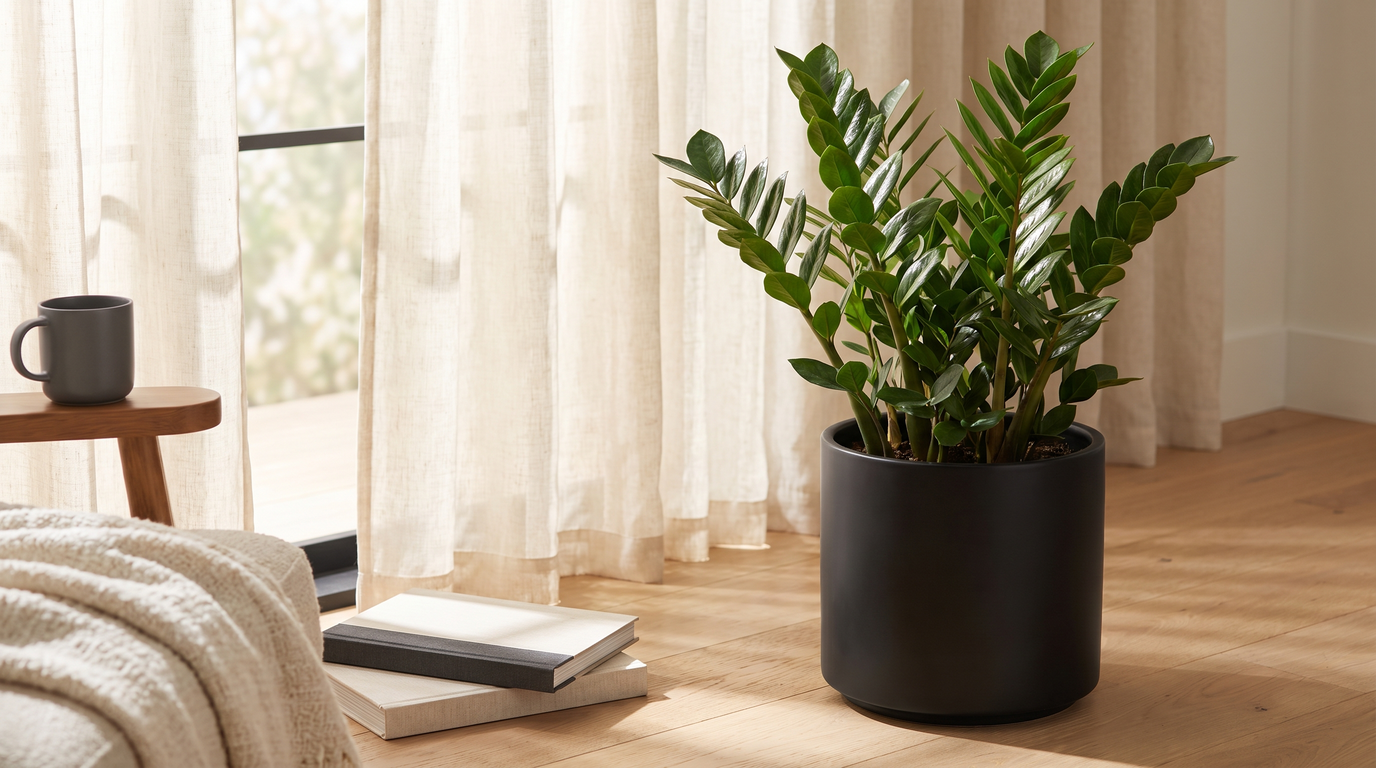
Some plants ask for a lot. The ZZ Plant asks for almost nothing — and still manages to look like it belongs in a design magazine. Those waxy, deep-green leaflets march up each stem in perfect little rows, catching the light like they’ve been polished (they haven’t). It shrugs off dim corners, forgotten waterings, and dry apartment air, which is exactly why it’s the plant we recommend to renters, travelers, serial plant-killers, and anyone with a north-facing room they’d written off. Here’s how to keep a ZZ thriving for years — and the one habit that’s the only real way to hurt it.
1. Meet the ZZ Plant
The ZZ Plant (Zamioculcas zamiifolia — say “zee-zee” and never look back) is native to the dry grasslands and forests of eastern Africa, from Kenya down to South Africa. That heritage is the whole story: it evolved to survive long dry spells by storing water in fat underground rhizomes, potato-like structures hiding just below the soil line. Water in the bank means the ZZ can coast through neglect that would flatten a fussier plant.
A few varieties you’ll run into:
- Classic ZZ — the standard bright, glossy emerald form.
- Raven ZZ — new growth emerges lime-green and matures to a dramatic near-black purple. Stunning, and just as tough.
- Zenzi — a compact, curly dwarf cultivar that stays small and bushy, perfect for shelves and desks.
- Variegated ZZ — splashed with cream; rare, slow, and pricier, but a collector’s favorite.
The ZZ is a slow grower, so buy the size you want to live with. Patience is the price of admission — everything else about it is easy.
2. Light Requirements
This is the ZZ’s superpower: it tolerates low light better than almost any other houseplant, which is why you see it thriving in windowless offices and dim lobbies.
- Best growth: bright, indirect light. This is where it puts out the most new stems and keeps that lush, full look.
- Tolerates: medium and genuinely low light — growth just slows way down.
- Avoid: harsh, direct afternoon sun, which can scorch and pale those glossy leaves.
If your only spot is a dim corner and you want steady growth (not just survival), a small LED grow light on a timer keeps it happy and full. Rotate the pot a quarter-turn every few weeks so it grows evenly instead of leaning toward the window.
3. Watering Routine
If you only remember one thing about ZZ care, make it this: when in doubt, don’t water. Those water-storing rhizomes mean overwatering — not neglect — is the single most common way to kill a ZZ.
- Let the soil dry out almost completely between waterings, top to bottom.
- In practice that’s roughly every 2–3 weeks in the growing season, and as little as once a month in winter.
- Then water thoroughly until it runs from the drainage hole, and tip out anything left in the saucer.
Reading your plant: healthy stems stand firm and upright. Wrinkling stems or leaflets that curl inward mean it’s genuinely thirsty. Yellowing leaves and soft, mushy stalks at the base almost always mean the opposite — too much water and the start of rot. A cheap soil moisture meter takes the guesswork out entirely; wait until it reads dry near the bottom before you reach for the watering can.
4. Ideal Soil Mix
Drainage is everything for a plant that hates wet feet. You want a mix that holds a little moisture but dries quickly and never stays soggy.
A good recipe is a standard indoor potting mix loosened with a generous handful of perlite for aeration. If you tend to water on the enthusiastic side, cut in some cactus and succulent soil to speed drainage even more.
Always pot into a container with a drainage hole — this is non-negotiable for a ZZ. A terracotta pot is a smart pick because the porous clay wicks away excess moisture and makes overwatering much harder to do.
5. Fertilizing
ZZ Plants are famously light feeders and honestly do fine on very little. During spring and summer, a diluted balanced houseplant fertilizer once a month (or even just once or twice all season) is plenty to fuel new growth. Skip feeding entirely in fall and winter, when the plant is resting. Less is more here — overfeeding can burn the roots and brown the leaf tips.
6. Temperature & Humidity
Easygoing on both counts, which suits normal home life perfectly.
- Temperature: happiest between 65–85°F. Keep it above 50°F and away from cold drafts, unheated porches, and drafty winter windows — the ZZ dislikes the cold far more than it dislikes dry air.
- Humidity: average household humidity is fine. It won’t complain in a dry apartment, though it won’t turn down a little extra moisture either.
No need to mist or fuss. If your winter air gets desert-dry across your whole collection, a small room humidifier is a nice touch, but the ZZ is the last plant that’ll demand one.
7. Repotting
Slow growth means infrequent repotting — expect to move up only every 2–3 years, or when you see rhizomes crowding the surface or pushing against (even cracking) the pot. A snug ZZ is a happy ZZ, so don’t rush it into a bigger home.
When it’s time, choose a pot just one size up (about 2 inches wider), refresh the soil, and be gentle with those chunky rhizomes. Spring or early summer is the ideal moment. A clean pair of pruning shears is handy for trimming away any soft or rotted roots while you’re in there.
8. Propagation
Want free ZZ Plants? Two reliable methods, both requiring the ZZ’s signature ingredient — patience.
- Division (fastest): at repotting time, gently tease apart the rhizome clump so each section has a stem and roots attached, then pot each piece up separately. You’ll have full plants immediately.
- Leaf cuttings (slow but fun): snip a healthy leaflet, let the cut end callus for a day, then stand it in soil or water. Over a couple of months it forms a tiny rhizome, and eventually a new stem. A dab of rooting hormone improves your odds.
Leaf propagation can take many months to show real growth, so start a few at once and forget about them — checking in later is half the fun.
9. Common Problems & Pests
- Yellowing leaves + mushy stems: the classic overwatering signal. Ease up, let the soil dry fully, and if the base is soft, unpot and check the rhizomes — trim any rot with clean shears and repot in fresh, gritty mix.
- Brown, crispy leaf tips: usually too much fertilizer, or occasionally very dry, salty tap water. Flush the soil and dial back feeding.
- Leggy, stretched, leaning stems: not enough light. Move it brighter or add a grow light, and rotate the pot regularly.
- Pests: rare, thanks to those tough waxy leaves. Watch for the occasional mealybug (white cottony spots) or scale. Wipe them off and treat with neem oil, repeating weekly until they’re gone.
- Dusty leaves: not a health problem, but a quick wipe with a damp cloth restores that signature glossy shine and helps the plant photosynthesize.
Frequently Asked Questions
Is the ZZ Plant toxic to pets and kids? Yes — all parts contain calcium oxalate crystals, which can cause mouth irritation, drooling, and stomach upset if chewed. It’s not usually dangerous, but keep it out of reach of curious cats, dogs, and toddlers, and wash your hands after pruning.
Why isn’t my ZZ growing? Probably nothing’s wrong — ZZ Plants are naturally slow, and they nearly stop in winter’s low light. If it’s putting out no new stems for a very long stretch, give it brighter light and confirm you’re not overwatering.
Can a ZZ Plant really survive in a room with no windows? It can survive surprisingly long on ambient light alone, which is why they’re office favorites — but “survive” isn’t “thrive.” For steady new growth in a windowless space, add a small grow light on a timer.
How often should I water in winter? Often just once a month, sometimes even less. Cold temperatures and short days mean slow growth and slow drying, so always check that the soil is dry deep down before watering.
Quick Gear Checklist
- 💧 Soil moisture meter
- 🪴 Indoor potting mix + perlite
- 🏺 Terracotta pot with drainage
- 💡 LED grow light
- 🌿 Balanced houseplant fertilizer
- ✂️ Pruning shears
- 🐛 Neem oil
Give a ZZ Plant a spot with some light, water it far less than feels natural, and then mostly leave it alone — that’s the entire secret. It rewards benign neglect with years of glossy, sculptural greenery and asks almost nothing in return. If you’re building confidence as a plant parent (or just want one gorgeous thing you can’t kill), the ZZ belongs on your shelf. Happy growing, from all of us at Planty Shanty. 🌱
Leave a Reply