
Disclosure: This post contains affiliate links; Planty Shanty may earn a small commission at no extra cost to you. As an Amazon Associate, I earn from qualifying purchases. This article is for general educational purposes and is not medical advice — check with a healthcare provider before using herbs medicinally, especially if pregnant, nursing, or allergic to ragweed/daisies.
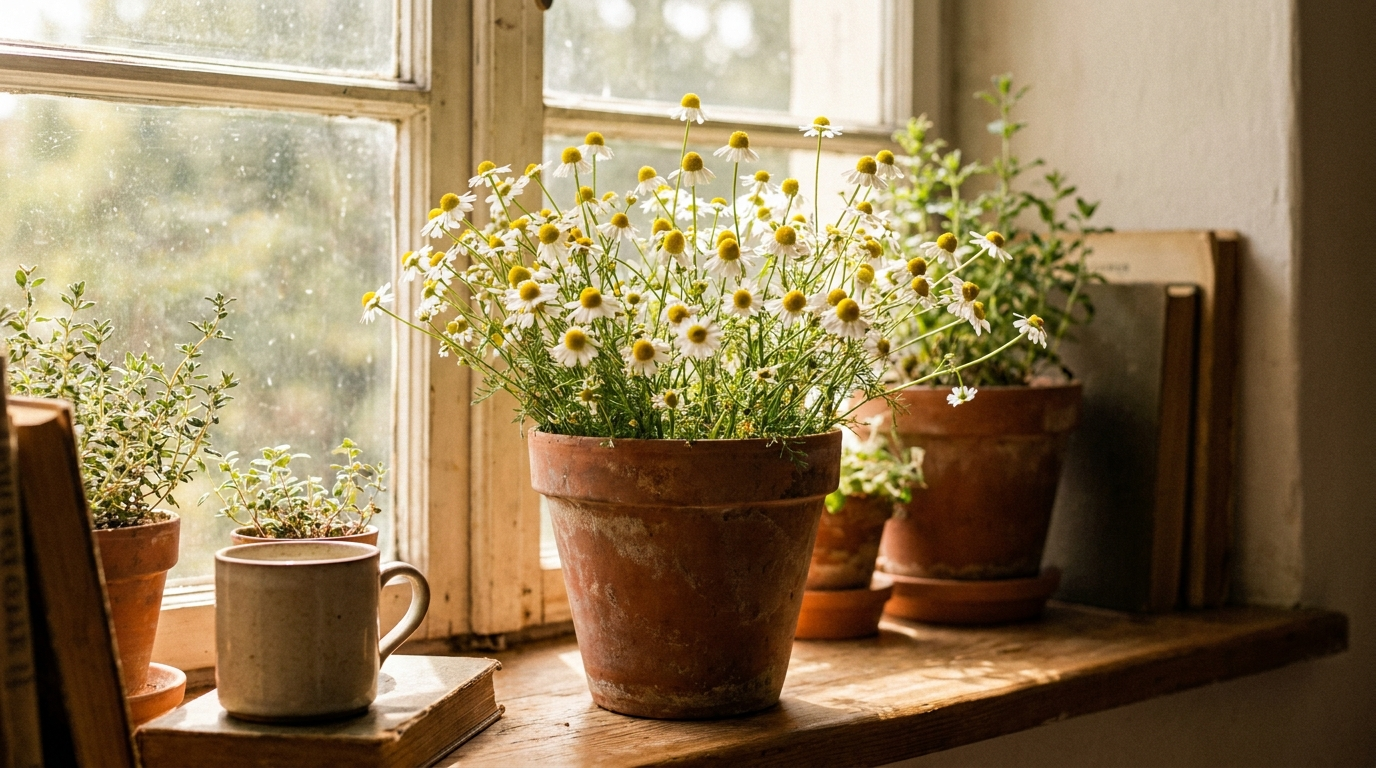
If there’s one herb that earns its spot in a healing cabinet, it’s chamomile. Those cheerful little apple-scented daisies dry into the most soothing bedtime tea, and the plant is genuinely easy to grow on a sunny sill or balcony. Here’s how.
Meet the plant
Two types are common: German chamomile (an annual that grows tall and bushy, best for lots of flowers) and Roman chamomile (a low perennial groundcover). For tea, most people grow German chamomile from chamomile seeds.
Light
Chamomile wants full sun — 6+ hours a day. On a dim windowsill it gets leggy and flowers poorly; a grow light fixes that.
Water
Let the top inch of soil dry between waterings. Chamomile is fairly drought-tolerant and dislikes soggy roots, so always use a pot with drainage.
Soil
Keep it simple — a light, well-draining potting mix. Chamomile actually flowers better in lean soil, so skip heavy fertilizing.
Harvesting & drying
Pick the flower heads when the white petals are fully open and flat (or just starting to curl back). Harvest in the morning after the dew dries. Spread them on a drying rack for 1–2 weeks, then store in amber jars. Frequent picking = more flowers.
In the cabinet
Chamomile is traditionally brewed as a calming, sleep-friendly tea. Steep a spoonful of dried flowers in hot water with a tea infuser for 5 minutes.
FAQ
How long from seed to flower? About 6–10 weeks for German chamomile.
Does it come back? German chamomile is annual but self-seeds readily; Roman chamomile is perennial.
Can I grow it indoors? Yes, with a bright south window or a grow light.
Quick gear
Part of the Healing Herb Cabinet. 🌿
Leave a Reply